Best Putters 2026: What Actually Changed This Year
Updated September 2026.
The best putters of 2026 fall into three groups: premium milled (Scotty Cameron Phantom, Bettinardi BB), high-MOI mallets (TaylorMade Spider, Odyssey Ai-DUAL), and zero-torque designs (LAB Golf DF3i, Odyssey Ai-DUAL Square 2 Square Jailbird). All of them have a flat face, the same shape putters have had for decades. One Swiss brand chose a different technology, a curved face that keeps your distance more consistent when your stroke isn't perfect. Here is what actually changed this year.
Best Putters of 2026: The Short List
There is no single best putter in 2026. The right choice depends on the miss you want help with. Most 2026 putters help you when you strike the ball toward the toe or heel. Very few help when you strike it a little high or low on the face, which changes how far the ball rolls.
- If you want premium milled craftsmanship, look at the Scotty Cameron Phantom 5 (mallet, $499; $549 for the Phantom 5 OC) or the PING PLD Milled Anser (blade).
- If you want maximum help on toe and heel misses, look at the TaylorMade Spider Tour X (mallet, from $349) or the Odyssey Ai-DUAL (from $349).
- If you want a putter designed to stay square to your stroke path, look at the LAB Golf DF3i (mallet, $499-$599) or the Odyssey Ai-DUAL Square 2 Square Jailbird (mallet, $399).
- If you want a one-piece milled putter with no insert, look at the Bettinardi BB Series (blade or mallet, $495-$550).
- If you want grooves that even out ball speed from toe to heel, look at the Evnroll ER2 (blade) or ER8 (mallet), both $399.
- If you want a flat face that still helps on high and low strikes, look at the Cobra 3DP Tour Supernova (mallet, $379), which uses four loft zones on the face.
- If you want a good putter under $200, look at the Cleveland HB SOFT 2 (mallet or blade, $159).
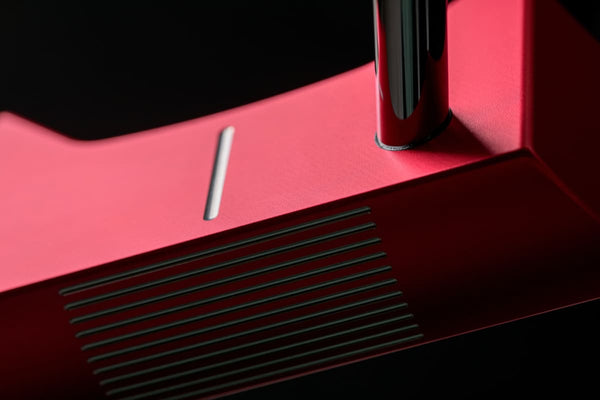
- If you want your distance to stay consistent when you strike the ball a little high or low, look at the myvicto E-Series (mallet) or B-Series (blade). The face is curved, so the loft changes smoothly from the bottom of the face to the top. The price sits in the same premium range as the milled putters above.
The 2026 comparison table below has the details for each brand.
What Actually Changed in Putters for 2026
Every year, brands release new putters. Every year, most of the changes are cosmetic. New colors. New alignment graphics. A reshuffled lineup. The core technology stays the same.
2026 is different. Three genuine shifts happened.
Zero torque went mainstream. LAB Golf proved the concept. Now Odyssey has launched zero-torque models in familiar shapes. This is not a niche anymore. Zero torque is becoming a category.
Face insert technology got smarter. Scotty Cameron's new Studio Carbon Steel (SCS) insert uses carbon steel's natural damping for softer feel. Odyssey's AI-designed inserts continue to evolve. Cobra's Descending Loft Technology addresses vertical strike variation with four discrete loft zones.
3D printing matured. Cobra's 3D-printed lattice is no longer experimental. It allows weight placement impossible with traditional casting, pushing MOI higher in smaller head shapes.
What did not change: most brands listed above work on the horizontal axis. Toe-heel forgiveness. Face angle stability. Alignment aids. The face shape did not change either. Every brand above still uses a flat face, and Cobra splits its flat face into four zones with different lofts.
From the $159 Cleveland to the $549 Scotty Cameron, almost every putter in this guide has one fixed loft. Catch the ball a little high or low and the distance changes. Most brands put their work into left-and-right misses, but the up-and-down miss also changes how far your ball rolls. Keep that in mind as you read.
Let us look at each brand.
Scotty Cameron: Phantom 5, 7, and 9R
Scotty Cameron redesigned the entire Phantom mallet lineup for 2026. Three head shapes. Nine total configurations across different hosel and shaft options.
What is new
The headline is the Studio Carbon Steel (SCS) full-face insert. Carbon steel has greater natural damping capacity than the Teryllium, stainless steel, and aluminium used in previous generations. The result is a noticeably softer, more muted feel at impact. The chain-link milling pattern on the insert surface improves sound and sharpens distance control feedback.
For the first time, the Phantom 5 is available in an Onset Center (OC) configuration for golfers seeking low-torque, face-balanced performance. This is Scotty Cameron's answer to the zero-torque trend without committing to the LAB Golf approach.
The models
Phantom 5: Modern wingback mallet. Compact profile. Single sightline. The workhorse of the lineup. Trusted by multiple PGA Tour winners. Available with plumber's neck (toe hang) or new OC configuration (face balanced). Not sure which balance profile fits your stroke?
Phantom 7: Larger footprint with angular wings. Rail-like alignment from the extended wing lines. More stability than the 5. Suits golfers who want a bigger visual presence behind the ball.
Phantom 9R: Full-length sightline from face to back. The most alignment-forward model. High MOI from the wider body. Best for golfers who rely on a visible line to aim.
Pricing
$499 for standard models. $549 for the Phantom 5 OC. Available February 2026 (Phantom 5 OC: April 2026). Scotty Cameron remains the premium benchmark. You pay for the name, the milling quality, and the resale value.
Honest take
The SCS insert is the real upgrade. The feel improvement over previous Phantom generations is noticeable. The rest is refinement. If you already own a recent Phantom and putt well with it, this is not a must-upgrade. If you are buying your first Scotty Cameron, the 2026 Phantom line is the best mallet they have ever made.
TaylorMade: Spider Tour Series and TP Reserve
TaylorMade runs three putter families in 2026: Spider Tour (high-MOI mallets), TP Reserve (premium milled blades), and TP Black (accessible traditional shapes).
Spider Tour Series (S, V, X, Z)
The Spider Tour remains one of the most recognized mallet shapes in golf. Four models offer different head shapes and alignment options. The Spider Tour X is the high-MOI flagship with the True Path alignment graphic. The Spider Tour Z is the compact option with less visual bulk.
The MySpider customization platform lets you choose from four finishes (Hydro Blast, Black, Gunmetal, Rose Gold), face insert material, and color. This level of personalization is unique in the mallet market.
The Spider 5K-ZT adds a counter-balanced model for 2026. Counter-balancing adds weight in the grip end (butt end) of the shaft to raise the balance point, paired with a heavier head and oversized grip. The result is a more stable, anchored feel with less wrist involvement.
TP Reserve
TaylorMade's premium milled blade and mallet line. CNC-milled from 303 stainless steel. The TP Reserve B13 is a classic blade with refined lines. These compete directly with Scotty Cameron and Bettinardi on craftsmanship and feel.
TP Black
Classically inspired, tour-proven shapes at a more accessible price point. For golfers who want TaylorMade quality without the Spider aesthetic or TP Reserve price.
Honest take
The Spider Tour X remains one of the best high-MOI mallets available. The customization options are a genuine differentiator. The TP Reserve line is underrated. If you want a premium milled blade that is not a Scotty Cameron, the TP Reserve B13 deserves a look. The weakness: TaylorMade's face insert technology has not changed meaningfully. The Pure Roll insert works. It is not innovating.
Odyssey: Ai-DUAL and Zero Torque
Odyssey's main 2026 change is the Ai-DUAL line, which succeeds Ai-ONE with a new dual-layer insert. The Square 2 Square zero-torque models, launched in 2025, now also come with the Ai-DUAL insert.
Ai-DUAL
The Ai-DUAL insert is designed with artificial intelligence and has two layers: a soft urethane outer layer and a firm inner layer. Odyssey says it keeps ball speed consistent across the face and improves forward roll up and down the face, with a deeper groove angled at 19°.
The Ai-DUAL lineup spans blades and mallets, including the #1 blade, the #7, the Double Wide and several Jailbird shapes, some with ½ Ball alignment.
Zero Torque (Ai-DUAL Square 2 Square Jailbird)
Odyssey's entry into zero-torque puts the technology into familiar Odyssey shapes. The Ai-DUAL Square 2 Square Jailbird uses a center-shafted design that Odyssey says helps the face stay square to your path throughout the stroke.
This matters because LAB Golf proved zero torque works but offered limited head shapes. Odyssey brings zero torque to shapes that look conventional from address. For golfers curious about zero torque but unwilling to use a LAB Golf head shape, Odyssey provides the on-ramp.
Honest take
The Ai-DUAL insert is the best horizontal forgiveness technology at its price point ($349). The zero-torque models are a smart strategic play. But zero torque is a stroke management solution. It is designed to help the face stay square to your stroke path. It does not address what happens at the face surface when the ball is struck. Horizontal forgiveness: strong. Vertical: the face is still flat, with a single loft.
PING: PLD Milled and Scottsdale
PING's 2026 putter lineup splits into two tiers: PLD Milled (premium) and Scottsdale (performance).
PLD Milled
PING's premium milled line. CNC-milled 303 stainless steel. The Anser shape is the most copied putter design in history.
Machined in PING's Arizona facility with the same tolerances as their tour-issue models. Sole weighting allows for adjustable feel and swing weight.
Scottsdale
The performance tier. Multiple head shapes including the Anser, DS 72, and Fetch (ball pickup notch). Dual-durometer face inserts on select models. PING's quality control at this price point remains among the best in the industry.
Honest take
PING does not chase trends. They refine. The PLD Milled Anser is a legitimate contender for the best blade in 2026. The Scottsdale line offers the most consistent quality-to-price ratio in the market. What PING does not do: innovate on face technology. The flat face with uniform milling is unchanged. PING perfects the traditional approach. They do not question it.
Cleveland: HB SOFT 2
Cleveland occupies the value segment. The HB SOFT 2 line uses SOFT milling in 304 stainless steel to produce a surprisingly smooth feel at a sub-$200 price point.
Multiple head shapes cover every stroke type. Perimeter weighting pushes MOI higher than expected at this price. Alignment features are clean without being excessive.
Honest take
The best putter under $200. Period. If you are testing the waters, switching stroke styles, or simply refuse to pay $400+ for a putter, the Cleveland HB SOFT 2 is the answer. The limitation is refinement. Compare it side by side with a Scotty Cameron or PING PLD and you hear the price difference. You feel it. But on the scorecard, the gap is smaller than the price gap suggests.
LAB Golf: DF3i and OZ1 HS
LAB Golf owns the zero-torque category. Their Lie Angle Balance technology is designed to keep the face square to the arc of your stroke. LAB fits the putter to your lie angle and balances it to those specifications.
DF3i
The updated DF3. Milled from 6061 aluminium with a new fly-milled stainless steel insert. The stainless insert is firmer and faster than the aluminium-only face of the original DF3. More responsive feedback. Slightly hotter ball speed. LAB's most refined putter to date.
OZ1 HS
LAB's first heel-shafted design. This is their most conventional-looking putter. From address, it resembles a traditional mallet. The zero-torque technology is invisible. For golfers who want the performance of Lie Angle Balance without the distinctive LAB Golf appearance, the OZ1 HS is the bridge.
Honest take
LAB Golf solved a real problem. Its Lie Angle Balance design is intended to keep the face square to the stroke's arc. The DF3i is the best zero-torque putter available. The OZ1 HS makes the technology accessible to traditionalists. The limitation: zero torque addresses stroke mechanics (helping the face stay square to the stroke path). It does not address what happens at the face surface (loft consistency, vertical sweet spot). LAB's face is flat, with a single loft.
Cobra: 3D Agera and Descending Loft
Cobra is the boldest brand in the putter market right now. The 3D-printed lattice construction is not a gimmick. It is a manufacturing breakthrough that allows weight distribution impossible with traditional casting or forging.
3DP Tour Supernova
The 2026 flagship. 3D-printed nylon lattice structure. Weight pushed to the extreme perimeter. Four tungsten weights for adjustable swing weight and MOI. The lattice is visible through the sole, which divides opinion aesthetically but delivers measurably higher MOI in a compact mallet form.
Descending Loft Technology (DLT)
Cobra tackles vertical strike variation by changing the loft on a flat face. DLT uses four discrete loft zones across the face height. The top zone has the most loft and the bottom zone the least. The goal is consistent launch regardless of vertical contact point.
This is the same problem a curved face addresses. Cobra's approach uses four steps. A curved face uses an infinite, continuous gradient. Different engineering. Same recognition that the vertical axis matters.
Honest take
Cobra deserves credit for tackling vertical strike variation through the face geometry itself. DLT is a real innovation, not marketing language. The 3D printing is mature and delivers on its promise. The limitation: four discrete loft zones create three transition points where the loft jumps. A ball struck exactly on the boundary between two zones may not gain the smooth compensation that a continuous gradient provides. Steps work.
Bettinardi: BB Series and VDF Milling
Bettinardi is the craftsman's choice. One-piece milled. No inserts. The BB Series for 2026 features a bold Savannah Blue PVD finish and the latest VDF (Variable Depth Flymill) face technology.
VDF Milling
Nine precision-milled zones across the face. Each zone has a different milling depth. Shallower milling in the center produces a firmer feel. Deeper milling toward the edges softens impact and normalizes ball speed on off-center hits. The result is more consistent speed across the face without using an insert.
Honest take
If you want a one-piece milled putter with no insert, Bettinardi is the reference. The VDF face technology is the most sophisticated milling approach in the industry. The feel is distinctive: firm, crisp, responsive. Bettinardi putters reward good contact and tell you exactly when you miss. The limitation: VDF works on the horizontal axis. The nine zones vary depth left to right. Vertically, the face is flat. Premium craftsmanship. Traditional geometry.
Evnroll: SweetFace Technology
Evnroll's entire brand is built around one concept: the SweetFace. Precision-milled grooves with variable depths across the face. The grooves are shallower in the center and progressively deeper toward the toe and heel. Off-center hits are nudged back toward the target line.
2026 Lineup
The ER2 (blade), ER8 (mallet), and ER10 (mallet) carry the latest SweetFace refinements. The groove pattern has been updated for tighter dispersion on mishits. Evnroll claims the most consistent ball speed across the face of any putter on the market.
Honest take
Evnroll's groove technology genuinely reduces horizontal dispersion. Independent testing confirms the off-center speed consistency claims. For golfers who miss toward the toe or heel frequently, Evnroll provides a measurable advantage. The limitation: the grooves work left to right. Vertically, the Evnroll face is flat. The SweetFace solves one axis. The other remains untouched.
2026 Putter Comparison Table
| Brand | Key 2026 Model | Type | Innovation | Horizontal Forgiveness | Vertical Forgiveness | Price Range |
|---|---|---|---|---|---|---|
| Scotty Cameron | Phantom 5 | Mallet | SCS full-face insert | High (perimeter weighted) | Standard (flat face) | $499-$549 |
| TaylorMade | Spider Tour X | Mallet | Pure Roll insert + MySpider customization | Very high (extreme MOI) | Standard (flat face) | $349-$420 |
| Odyssey | Ai-DUAL Square 2 Square Jailbird | Mallet | AI insert + zero torque | Very high (AI-optimized + ZT) | Standard (flat face) | $399 |
| PING | PLD Milled Anser | Blade | Tour-level CNC milling | Moderate (blade) | Standard (flat face) | Not published |
| Cleveland | HB SOFT 2 | Mallet/Blade | SOFT milling at value price | Moderate-high | Standard (flat face) | $159 |
| LAB Golf | DF3i | Mallet | Zero torque (Lie Angle Balance) | High | Standard (flat face) | $499-$599 |
| Cobra | 3DP Tour Supernova | Mallet | 3D-printed lattice + DLT (4 loft zones) | Very high (3D weight placement) | Improved (4 discrete zones) | $379 |
| Bettinardi | BB Series | Blade/Mallet | VDF 9-zone milling | High (variable depth milling) | Standard (flat face) | $495-$550 |
| Evnroll | ER2 / ER8 | Blade/Mallet | SweetFace variable grooves | Very high (groove technology) | Standard (flat face) | $399 |
| myvicto | E-Series / B-Series | Mallet / Blade | Curved face | Moderate to high (depends on head shape) | ~6mm (Quintic test) | See configurator |
Prices are US list prices.
Read down the vertical forgiveness column. It shows how much help you get when you strike the ball a little high or low, the kind of miss that can change your distance. Most rows show a flat face with one loft. Cobra uses four loft zones on its flat face, and myvicto curves the face. The rest of this guide explains what that difference does for your distance.
Already know what type of putter suits your stroke? Our complete selection guide walks through every decision.
The Road None of the Brands Above Has Taken
Most brands listed above are working on the horizontal axis. Some have reached impressive levels of horizontal forgiveness. AI-designed inserts. Variable-depth milling. 3D-printed weight redistribution. Zero-torque shaft configurations. The horizontal axis is well covered.
The vertical axis is a different story.
Cobra works on vertical strike variation with Descending Loft Technology: four loft zones on a flat face. It is a meaningful step, with transition points where one zone meets the next.
One Swiss brand took a different road and curved the face. Instead of a few loft zones, the loft changes continuously from the bottom of the face to the top.
Most putters in that table refine the flat face. A curved face is built for the high and low strikes that change your distance.
The flat face is the long-standing tradition in putter design. Most designers start from it, then refine toe-heel forgiveness, alignment, feel, and weight distribution. Decades of craft have gone into that approach.
But the face is the one surface that touches the ball, and it shapes launch angle, spin, and energy transfer. On every putter in that table except myvicto, that surface is flat. Most have one fixed loft, which suits one hand position, and golfers rarely repeat that position exactly. On a curved face, the loft at impact changes much less when your hands move.
Myvicto: The Curved Face
Myvicto is a Swiss putter brand built by a mechanical engineer and a cardiac surgeon. Two careers where a fraction of a millimeter changes the outcome. They spent years asking one question: why do good strokes still produce inconsistent distances?
The answer was not in the stroke. It was in the face.
On the myvicto curved face, the loft varies continuously from the bottom of the face to the top. There is no single fixed loft angle. Instead, the face provides a gradient that adapts to where the ball is struck.
Three simultaneous advantages
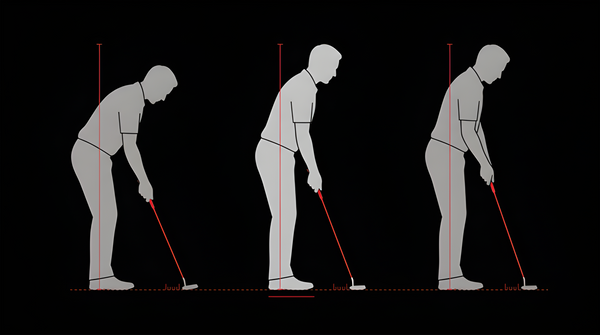
- Loft adapts to hand position. Your hands are never in the same position twice. On a flat face, every variation changes the effective loft. The curved face compensates. When your hands press forward, the face tilts forward and loses loft, and the ball meets a part of the curve that has more loft. When your hands hang back, the face gains loft, and the ball meets a part of the curve with less loft. So the loft at impact changes much less than on a flat face. The launch is more consistent from putt to putt.
- Contact happens at the equator. The ball leaves the face on a flatter line, so the skid is shorter and more consistent. That makes your distance easier to control.
- The vertical sweet spot expands. From 1-2mm on a flat face to around 6mm (Quintic test) on the curved face.
How it compares
Scotty Cameron, PING, and Bettinardi bring decades of heritage and refined flat faces, and golfers trust their names. Myvicto is also CNC-milled in a Swiss workshop and sits in the same premium range, but its technology is in the face itself. The curved face compensates for small changes in your hand position, so the loft at impact changes less. You get more consistent distance and more room for error when your stroke isn't perfect.
TaylorMade, Odyssey, and Evnroll lead on horizontal forgiveness. Myvicto's horizontal MOI is moderate to high depending on the head shape (E-Series mallet vs B-Series blade). Its curved face is built for a different miss: the strike a little high or low on the face.
Cobra's Descending Loft Technology is the closest concept. Cobra splits a flat face into four loft zones. Myvicto uses a curved face instead, so the loft changes continuously with no steps. Both designs aim at the same thing: keeping the loft at impact steady from one putt to the next.
LAB Golf is designed to keep the face square to the arc of the stroke. Myvicto's curved face is designed to keep the loft at impact more consistent when your hands move. They work on different problems. If distance control is your main concern, start with the face, because the loft at impact sets how the ball launches.
The models
Every myvicto putter uses the same curved face. The models are named after dams, five of them in Switzerland. A dam's curve converts hydraulic pressure into structural strength. Myvicto's curve turns stroke variation into more consistent distance.


CNC-milled from 6061 aluminium. Swiss workshop. Configurable online with multiple grip, shaft, and weight options. See how the curved face works.
How to Choose Your 2026 Putter
The putter market in 2026 is the strongest it has ever been. Every brand listed in this guide makes a good putter. The question is which problem you want your putter to solve.
If you want premium craftsmanship and resale value: Scotty Cameron Phantom 5 or PING PLD Milled Anser.
If you want maximum horizontal forgiveness: TaylorMade Spider Tour X or Odyssey Ai-DUAL.
If you want a zero-torque design: LAB Golf DF3i or Odyssey Ai-DUAL Square 2 Square Jailbird.
If you want the best value: Cleveland HB SOFT 2.
If you want variable horizontal speed control: Evnroll ER2 or ER8.
If you want vertical forgiveness and consistent distance: Myvicto E-Series or B-Series.
Most golfers will be well served by any putter in this guide. The ones who care most about distance consistency should look at the shape of the face first. Browse the full myvicto collection.
Find Which 2026 Putter Fits Your Game
Answer a few quick questions about your stroke and the miss that bugs you most. We'll match you to the putter built for your game.
Take the quizFrequently Asked Questions
What is the best putter of 2026?
It depends on what you prioritize. For premium milled feel: Scotty Cameron Phantom 5. For maximum MOI: TaylorMade Spider Tour X. For zero torque: LAB Golf DF3i. For value: Cleveland HB SOFT 2. For vertical forgiveness and distance consistency: myvicto E-Series. There is no single best putter. There is the best putter for your stroke, your priorities, and your budget.
Are the new Scotty Cameron Phantom putters worth the upgrade?
If you are buying your first Scotty Cameron mallet, the 2026 Phantom line is the best they have made. The SCS insert is a genuine improvement in feel. If you already own a 2024 or 2025 Phantom and putt well with it, the upgrade is incremental. The performance gain does not justify the cost unless feel is paramount to you.
What is zero torque in a putter?
Zero-torque putters are designed to help the face stay square to the stroke path. LAB Golf uses Lie Angle Balance technology for this. This describes how the putter is balanced, not a guarantee that the golfer cannot turn the face. It addresses stroke mechanics. It does not change what happens at the face surface when the ball is struck.
Is Cobra's Descending Loft Technology worth trying?
It can help if high and low strikes are your concern. Cobra keeps a flat face but splits it into four loft zones, designed to even out launch across different contact heights. The trade-off is the transition points where one zone meets the next. A curved face works on the same problem without zones: the loft changes continuously, so the loft at impact stays more consistent when your hands move.
What is a curved face putter?
A putter with a curved face where the loft varies continuously from bottom to top. The loft at impact changes much less when your hands move, so the launch is more consistent from putt to putt. The concept was first patented by Teardrop in the 1990s. Myvicto's contribution is a continuous-gradient geometry with specifically engineered tangent heights, CNC-milled in Switzerland from 6061 aluminium. Full explanation here.
How much should I spend on a putter in 2026?
Under $200 gets you a good putter (Cleveland HB SOFT 2). Around $349 gets you a very good putter with meaningful technology. $400-$600 gets you premium craftsmanship and advanced technology (Scotty Cameron, Bettinardi, myvicto). Buy the best putter you can afford. You will use it more than any other club.
Do I need a putter fitting?
Yes. Length, lie angle, loft, head weight, and toe hang all affect performance. A basic fitting at a big-box golf shop is often free. A full fitting takes 45 to 90 minutes and costs up to about $175. Even a $500 putter performs poorly if it is the wrong length or lie angle for your setup. Full fitting guide here.
What changed in putters for 2026?
Three genuine shifts: zero-torque putters went mainstream, face inserts got smarter, and 3D-printed heads matured. What did not change is the face shape: almost every putter in this guide is flat, with one loft. The myvicto curved face is the alternative for golfers who want more consistent distance when they strike the ball a little high or low.
Related guides
- Mallet vs Blade Putter: How to Choose
- How to Choose a Putter: The Complete Guide
- Best Putter for Arc Stroke (2026)
- Putter Fitting Guide
- How the Curved Face Works
- Free Putter Fitting Experience
- Browse All Myvicto Putters